
Guide · Live stations
How to choose your live stations.
Which counters, how many, and where they go. The difference between a room that flows and a room that queues.
Live stations are the most-requested and least-planned part of a UAE event. Hosts pick them by appetite, which is reasonable, and then discover that three counters in one corner produce one long queue instead of three short ones.
Stations are a floor-plan decision first and a menu decision second. Here is how to make both.
Prices and policies on this page are the ones our booking engine uses. Last reviewed .
The thirteen
Thirteen stations to choose from.
We run thirteen live cooking stations, from chaat, dosa and tandoor to live wok, sushi and sugarcane juice. The full list, with what each one cooks and how it is charged, is on the live station catering pages for Dubai and for Abu Dhabi, linked at the foot of this guide. This guide is about choosing between them.
Per counter
What each counter adds.
The Classic package includes no station, Premium includes one and Luxury includes two, so the first one or two counters are often already paid for in the per-head rate. Each one after that is a flat AED 250, whatever the guest count.
| Station | Notes |
|---|---|
| Live dessert / ice-cream | Best late-evening counter |
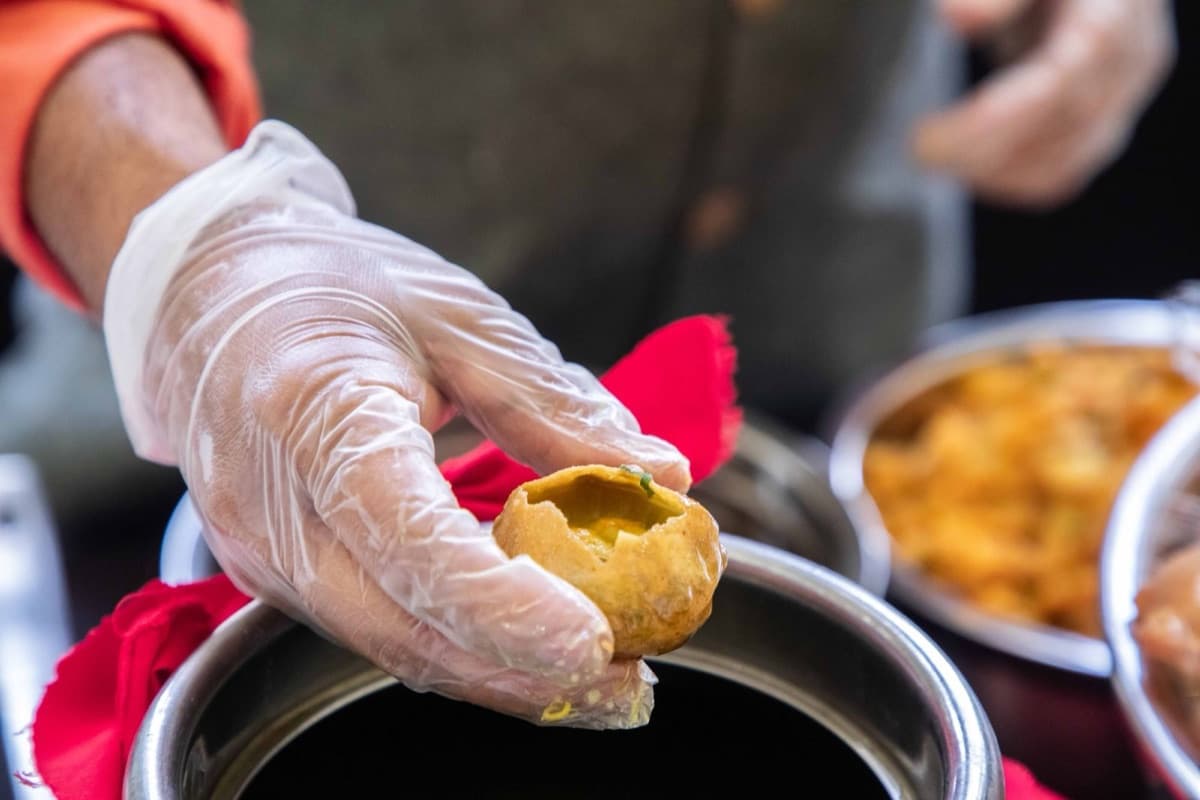
| Chaat | Strongest arrival station |
| South Indian / dosa | Slowest queue; needs space |
| Tandoor / grill | Needs an outdoor placement |
| Live wok / pasta | Fast turnover, works mid-event |
| Each extra station | AED 250 flat: chef and setup, up to three dishes |
How many
One counter per 75 to 100 guests.
That ratio assumes a buffet is also running. If stations are the main service rather than a supplement, plan one per 50 guests and expect a queue at each.
Spread them. Two stations at opposite ends of a room serve twice as fast as two stations side by side, because guests self-distribute. Three counters in one corner is the most common and most avoidable mistake.
By event type
What to pick.
- Mehndi or daytime function: chaat, live jalebi, sugarcane juice, ice gola.
- Sangeet: live wok, tak-a-tak, grill. Fast counters for a standing crowd.
- Reception: tandoor, curry noodle, live sushi, dessert.
- Corporate lunch: live wok or pasta. One counter, fast turnover, no queue into the afternoon.
- Home party: chaat or dosa. Self-contained and works in a villa garden.
- Post-wedding brunch: eggs and paratha, dosa, breakfast station.
Logistics
What a counter needs on site.
- Power and water within reach of the counter position.
- Ventilation for grill and tandoor, or an outdoor placement.
- Its own chef, included in the AED 250 setup fee for extra stations.
- Floor space for a queue that does not cross the buffet line.
Common questions
Answers before you ask.
- How much do live catering stations cost?
- Premium includes one station and Luxury includes two. Each station beyond that is a flat AED 250 for the chef and the setup, whatever the guest count, and cooks up to three dishes, which are priced like the rest of the menu. The price is the same in Dubai and Abu Dhabi.
- How many live stations should I have?
- About one per 75 to 100 guests if a buffet is also running, or one per 50 if stations are the main service. Spread them across the floor rather than grouping them.
- Which live station is best for arriving guests?
- Chaat. It is fast, vegetarian, holds a queue well and gives people something to do in the first thirty minutes.
- Can live stations run outdoors?
- Yes, and grill and tandoor counters are better outdoors for ventilation. All counters need power, water and safe access.
- Do live stations come with a chef?
- Yes. Each station runs with its own chef, included in the AED 250 setup fee for stations beyond your package allowance.
Keep reading
Related to this page.
- CateringLive station cateringLive station catering in Dubai: 13 live cooking stations, from chaat and dosa to tandoor and sushi, each with its own chef and setup.
- CateringLive station cateringLive station catering in Abu Dhabi: 13 live cooking stations, from chaat and dosa to tandoor and sushi, each with its own chef and setup.
- GuidesHow much food to order per guestHow many dishes and how much food per guest for a UAE event: course counts by package, live-station ratios, and how to plan a buffet for 50, 200 or 500 people.
- CuisinesStreet food & chaat cateringLive chaat and street food catering in Dubai. Pani puri, papdi, sev puri, kathi rolls and tak-a-tak, assembled in front of your guests. Included in Premium and Luxury.
- GuidesWhat catering costs per person in DubaiWhat catering in Dubai includes and what it comes to all in: about AED 10,448 for 50 guests and AED 20,213 for 100, with staff, setup and VAT.
Ready when you are
Compose your menu, course by course.
No commitment and no phone call. Choose every course yourself in about two minutes, then send it over and we'll take it from there.